
Are Memorable Backgammon Moves Still Impactful Today?

20 February 2026
TL;DR:
• Backgammon is a blend of strategy and psychology, with understanding your opponent's emotions and predictability being pivotal to victory.
• Observing your opponent's reactions can help predict their future moves, giving insight into their game plan.
• Emotional control is key; managing one's emotional responses prevents impulsive decisions, leading to better performance.
• A player's mindset greatly influences decision-making; an aggressive mindset leans towards risk-taking, whereas a reserved mindset might favor defensive play.
• Psychological strategies used in Backgammon include bluffing and breaking free from cognitive biases.
• Success in backgammon isn't just dependent on the dice roll, but also on strategic and psychological play, making quick, sound judgments, and effective handling of stress.
Ever wonder how psychology integrates with a seemingly simple game like Backgammon? Prepare for a mind-bending dive into the unknown as we explore the crucial role psychology plays in your Backgammon strategy. We'll unlock the secrets of understanding your opponent, master the art of emotional control, and uncover how strategic psychological manoeuvers can thrust your gameplay to an all-new level. Let’s roll the dice together on this exciting journey through the "Psychology of Backgammon: How Does It Impact Your Game?"
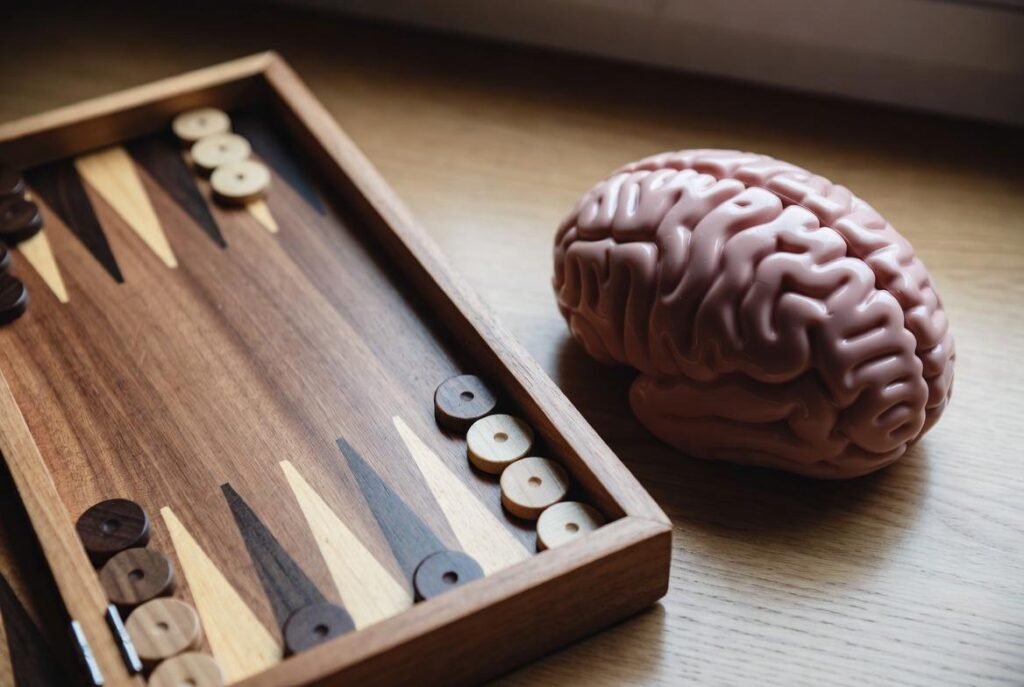
Backgammon isn't just about pure tactics. It's a blend of strategy and psychology. The Psychology of Backgammon is pivotal to a player's progress and eventual triumph. Let's dive into deeper layers of this captivating game.
When we speak of the Role of Psychology, we're talking about understanding your emotions as well as those of your opponent. If you can predict your opponent's moves, you're a step closer to victory. In a similar vein, managing your emotional responses keeps your game stable, preventing reckless moves borne out of frustration or overconfidence.
Thus, a firm understanding of psychology shapes your gameplay and heightens your chances of success in backgammon.
The application of psychological principles to backgammon triumphs over an approach only focused on probability or raw tactics. Understanding your opponent, controlling your emotions, and playing strategically by leveraging psychological principles form the triumvirate of success in backgammon.
The Psychology of Backgammon isn’t a simple subject. It involves your mind, your emotions, your gameplay strategies – and how you intricately weave them all together. So, the next time you sit down for a game of backgammon, remember you’re also playing a psychological game, where understanding your mind and your opponent’s may well pave the way to victory.
In Backgammon, understanding opponents is key. It can truly tilt the game in your favour.
Simple observation is a powerful tool. Notice how your opponent reacts to different roll outcomes. Do they favour particular moves or show a pattern in their play? By spotting these, you can get a sneak peek into their game plan.
Understanding your opponent also goes beyond observing their current moves. It means learning from their past behaviour. Keep a mental note of any repeat actions they take in certain situations and use this information to your advantage.
Significant is an understatement here. A game of Backgammon doesn't just play out on the board, it unfolds in the minds of the players. The more insight you have into an opponent's thinking, the better your ability to predict and counter their actions.
You can get this insight by understanding their psychology. Why do they make a certain move? What are they trying to achieve? What fears or hopes are guiding their decisions? The better you grasp these, the stronger your strategy will be.
Don't forget, though, that this goes both ways. As you attempt to understand your opponent, they too will be seeking insight into your psychology. It's a mind game within the game, adding another layer of excitement and intrigue to Backgammon.
You've probably played a game of Backgammon before, and whether it was a casual match with a friend or something more competitive, one thing was always clear: your mental state can greatly influence your performance. Isn't it fascinating? Let's dive deeper to understand this better.
Emotional control is like the hidden key that often interviews with the quality of your game. When your emotions control you, it's easy to make rash decisions, make mistakes, or even lose sight of your game plan. On the other hand, if you control your emotions, you stay calm and can make logical decisions, leading to better overall Backgammon performance. It's as if the dice, board, and chips all react to your moods!
Now, let's pay heed to the player's mindset. A strong and optimal mindset is the fuel that can lead your game engine. A player's mindset helps shape the decisions they make. A positive mindset may encourage a more aggressive style of play, pushing for more points and taking risks. A more reserved mindset may result in a defensive play, focusing on safe moves and gradual point gain. The key is to find your balance and adapt your mindset to match the game's flow.
Consider this: You can't predict the dice roll, but you can control how you react to it. Your mindset is your invisible hand over the dice, shaping your game's outcome. It's the secret sauce that can transform a good Backgammon player into a great one. Fascinating, isn't it? The next time you play, remember: no matter how the dice roll, you can always control your emotions and mindset to influence your Backgammon performance. Yes, you got this!
Backgammon, like many games, draws heavily on psychological strategies. The correct application of these can led to dramatic improvements in your gameplay.
Ever heard of bluffing in Poker? It works in Backgammon too. You make a play that suggests a certain strategy. Yet, your real plan is different. It lures your opponent into making moves that suit your actual agenda. You've got to be a careful actor, though. Offering too many hints can tip off your opponent, making your bluff fall flat.
We all have biases. In Backgammon, these can be a big pitfall. Players often stick to well-worn strategies, even when they're not yielding results. Cognitive biases, like the confirmation bias can blind us to better strategies because we selectively pay attention to the few times our tried methods work. Breaking free from these biases necessitates an honest examination of our results and a readiness to try new approaches.
Remember, Backgammon is as much a game of the mind as it is of counters and dice. Knowing your opponent, and more importantly, knowing yourself can make all the difference.
The game of Backgammon is a curious mix of skill and luck. This blend stirs up some real mental gymnastics for players. Knowing that the game is not one-sided really keeps us on our toes.
Playing Backgammon under pressure sharpens our mental strategies. It forces us to make quick yet sound judgments. Decisions become a lot more crucial when the dice isn't in our favour. But that's where the fun lies, along with some tension. When we handle this stress well, it could turn the game in our favour. Victory, after all, isn't just about what the dice roll out. It's about how we play what's given to us.
Gamesmanship and psychological tactics adds an extra dimension to Backgammon. These tactics could range from simple things like speed of play to complex aspects like bluffing. It might involve some mind-bending strategies to throw off your opponent's game.
Ultimately, we learn that in Backgammon, as in life, it's not just about the cards we're dealt, but how we play them. It's the balance between strategic play and knowing when to embrace the hand of fate. That's the real nugget of wisdom Backgammon offers and the beauty of its psychology.
By understanding the role of psychology in Backgammon, paying attention to opponent behavior, balancing emotional control and mindset, and employing psychological strategies, your game can ascend to new heights. Remember, improvement hangs on the balance of skill, luck, and savvy mental strategies. Savor the psychological depth Backgammon offers and enrich your gameplay!
Add Your Email Below: